

Panel specification sheets tend to list a dozen numbers on the same page, and a buyer new to sourcing solar panels can lose the important distinctions inside that list. For a P-type single-glass PV module, the two details that actually shape performance and installed cost are sitting right in the name — the cell type and the glass construction — and both affect how the module performs over a twenty-five-year warranty period, not just on the datasheet.
Solar cells are manufactured from either P-type or N-type silicon wafers, and the distinction comes down to how the silicon is doped during production. A P-type single-glass PV module uses boron-doped wafers, a manufacturing process that remains widely used across commercial and industrial-scale projects because it offers a cost-to-efficiency ratio that fits large installations where total system cost per watt matters more than the marginal efficiency gains N-type technology offers at a higher price point.
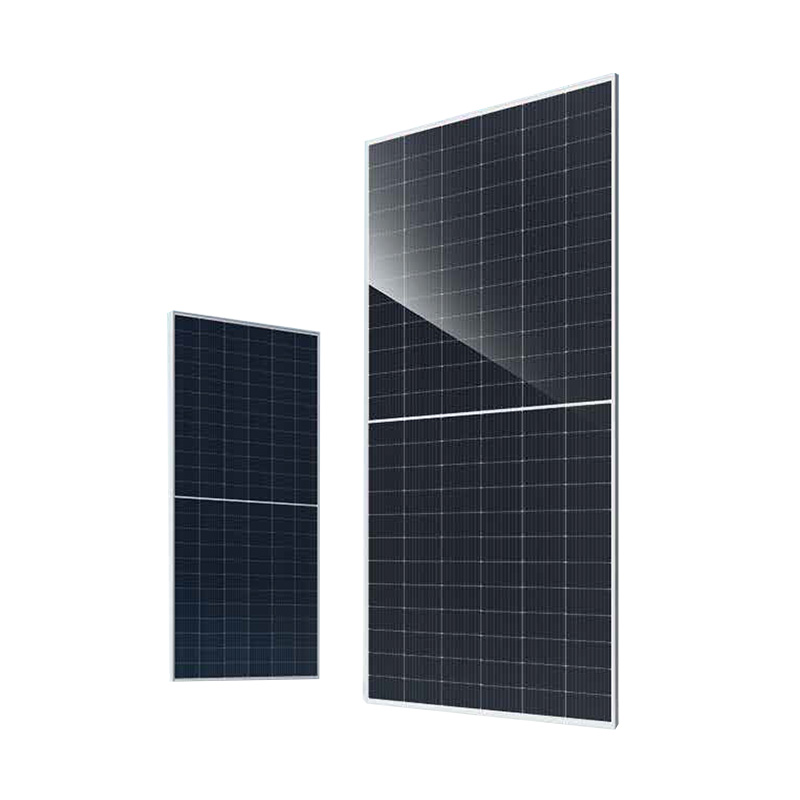
The "single-glass" part of the name refers to the backsheet construction — a P-type single-glass PV module uses a polymer backsheet rather than a second glass layer, which reduces panel weight and makes installation faster on rooftop projects where structural load is a real constraint. Sairifo's SIF72S30-LR P-type single-glass PV module is built on this lighter construction specifically for commercial rooftop and ground-mount projects where mounting logistics and structural loading are part of the site engineering review before installation begins.
Cell production starts with silicon wafers sourced against supplier purity specifications, since impurities at the wafer stage propagate into efficiency losses that show up years later as accelerated degradation rather than an immediate defect. Sairifo runs electroluminescence imaging on finished cells before lamination to catch microcracks that aren't visible to the eye but reduce a cell's output and long-term durability. Every P-type single-glass PV module is flash tested after lamination to confirm actual output against the rated power class printed on the label, and units outside tolerance are sorted into a lower power bin rather than shipped under an inflated rating.
Buyers comparing modules across suppliers should look past the headline efficiency number and check the annual degradation rate stated in the warranty documentation, since a P-type single-glass PV module with a slightly lower starting efficiency but a lower annual degradation rate can outperform a higher-efficiency competitor over a twenty-year system life. Sairifo publishes a linear degradation curve alongside the standard product warranty, giving a procurement team the data needed to model long-term energy yield rather than relying on year-one output alone.
Large commercial projects sometimes require frame color matching, connector type changes, or specific junction box configurations to meet a project's electrical design. Sairifo accommodates these adjustments on bulk orders for a P-type single-glass PV module without changing the underlying cell technology, which lets a buyer meet project-specific requirements without sourcing a separate product line.
Because this is a single-glass rather than bifacial construction, this panel captures light only from the front surface, which simplifies mounting hardware selection and racking design compared to bifacial modules that need reflective ground cover or elevated mounting to realize their rear-side gain. For commercial rooftop projects where the racking system is already fixed to a standard tilt and the roof surface underneath won't contribute meaningful reflected light, this construction avoids paying for a bifacial gain the site was never going to capture, which keeps the per-watt cost lower for projects where that gain wasn't recoverable to begin with.
Procurement teams sourcing container-volume quantities should request the flash test data for the specific production batch, the certified degradation curve, and confirmation of the power bin sorting method used, since these three data points determine whether the modules arriving on site will perform consistently with the datasheet a buyer priced the project against.
Your email address will not be published. Required field are marked*


Call support 24/7 (Whatsapp)
+86 15988592807
Send us Email
[email protected]
Visit our location
Building 1, No. 21 Shengfa Road, Lucheng District, Wenzhou, Zhejiang, China



 中文简体
中文简体  Français
  عربى
عربى 