

A plant manager reviewing next year's electricity budget usually finds the same line item growing faster than the rest: demand charges tied to peak usage windows. That single number is why industrial solar energy storage has moved from a sustainability talking point into a line item procurement teams actually model against utility rate schedules before signing off on a system purchase.
Manufacturing facilities running multi-shift operations often hit their highest power draw during the same afternoon hours utilities price the highest. Industrial solar energy storage systems charge during low-cost or high-generation periods and discharge during those peak windows, which shifts a facility's billed demand rather than its total consumption. For a plant with a demand charge structure, this shift alone can account for a meaningful share of the return calculation a procurement team runs before approving the purchase order.
Sairifo's commercial and industrial solar energy storage and power generation system pairs PV generation with battery storage and an energy management system that decides, in real time, whether to draw from solar, battery, or grid based on current pricing and site load. This coordination layer is often the part buyers underestimate during early quoting — the battery and panels are only half the system; the control logic is what actually produces the bill reduction a facility is buying the system for.
Procurement teams evaluating industrial solar energy storage for a specific site need load data before a system can be sized correctly — an undersized battery leaves peak charges uncovered, while an oversized one extends payback without proportional benefit. Sairifo works from a facility's interval load data and utility rate structure to size the battery capacity and inverter output before quoting, rather than proposing a standard package sized for an average customer profile.
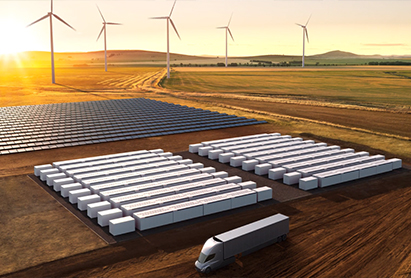
Many industrial solar energy storage installations at this scale use lithium iron phosphate cells, chosen over other lithium chemistries for their thermal stability in a continuous industrial duty cycle rather than a residential one with lighter daily use. Sairifo's battery modules go through cycle testing before being rated for a specific warranty period, and the system enclosures are built to the fire safety and electrical certification standards required for grid-connected commercial installations in the destination market — a detail worth confirming directly with a supplier before signing, since certification requirements differ meaningfully between regions.
Facilities that already have rooftop or ground-mount solar arrays are a common entry point for adding storage, since the generation asset already exists and storage captures value the site is currently exporting to the grid at a lower rate than it could self-consume. Sairifo's industrial solar energy storage systems are designed to integrate with an existing PV array rather than requiring a full system replacement, which changes the capital outlay a buyer needs to budget for compared to a greenfield installation.
A procurement team managing storage across several facilities needs remote monitoring that flags performance issues before they show up as a missed demand charge reduction on the utility bill. Sairifo's monitoring platform tracks battery state of health, charge and discharge cycles, and system uptime across sites, giving a facilities team the data needed to catch a degrading battery pack before it affects the site's peak-shaving performance.
Buyers comparing industrial solar energy storage suppliers should ask for the site sizing methodology used, the battery cycle-life warranty terms, and references from facilities operating a similar duty cycle to their own — a supplier that sizes systems from actual interval load data, rather than a standard package, is typically better positioned to deliver the demand charge reduction the purchase was justified on.
Your email address will not be published. Required field are marked*

Call support 24/7 (Whatsapp)
+86 15988592807
Send us Email
[email protected]
Visit our location
Building 1, No. 21 Shengfa Road, Lucheng District, Wenzhou, Zhejiang, China



 中文简体
中文简体  Français
  عربى
عربى 