

Solar power projects can have very different electrical requirements even when they use similar photovoltaic equipment. A commercial building connected to a utility network has different operating conditions from a remote facility without reliable grid access. For B2B buyers, selecting an On Grid Off Grid Solar Inverter therefore requires attention to the complete system configuration rather than inverter capacity alone. Input voltage, output characteristics, battery connection, operating modes, protection functions, and communication interfaces all need to correspond with the intended installation.
An On Grid Off Grid Solar Inverter can be considered for projects where solar generation needs to work with different power supply arrangements. In a grid-connected configuration, the inverter works with the utility supply and converts DC electricity from photovoltaic panels into AC power for the connected electrical system. The design needs to account for the local grid parameters and applicable electrical requirements.
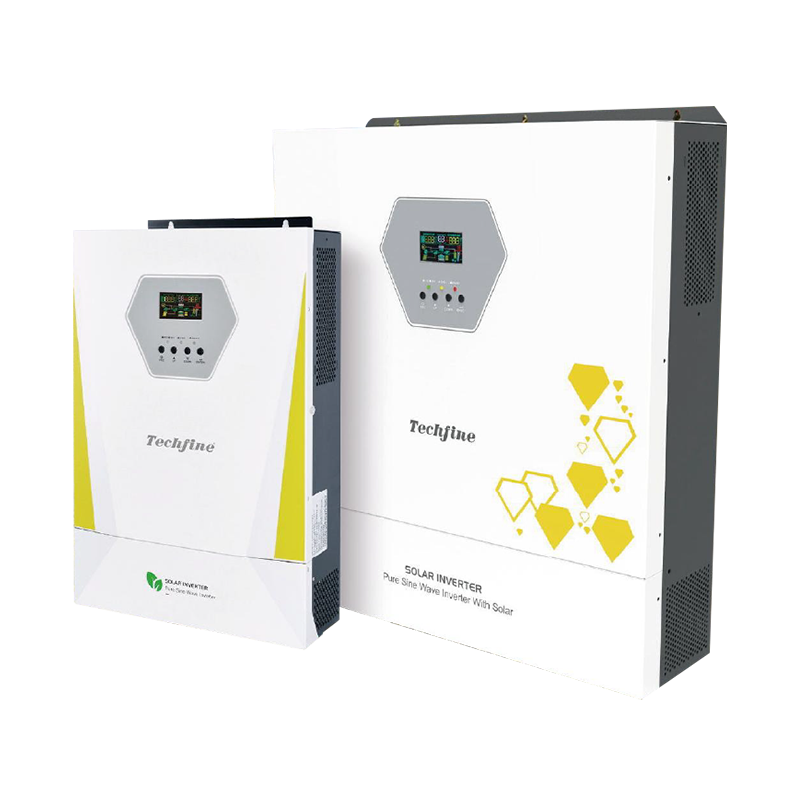
Off-grid installations operate differently. Since there is no utility source providing the normal AC reference, the inverter and associated energy-storage system need to support the site's loads independently. Battery capacity, charging characteristics, load profile, and expected operating duration consequently become important purchasing considerations.
For projects combining solar generation, storage, and utility power, an On Grid Off Grid Solar Inverter may need to support multiple operating conditions. Procurement teams should therefore provide the manufacturer with system voltage, frequency, PV array information, battery specifications, expected loads, and intended operating modes before finalizing the model.
The production of an On Grid Off Grid Solar Inverter involves multiple electrical and mechanical components. Depending on the model, these can include power conversion modules, control boards, capacitors, cooling components, terminals, protection devices, communication interfaces, and metal enclosures.
For a manufacturer handling B2B orders, assembly consistency is important when multiple units are supplied for one project. Wiring positions, terminal identification, component specifications, firmware configuration, labels, and enclosure arrangements need to correspond with the approved product configuration.
Factory quality control can include incoming component inspection, assembly checks, wiring verification, insulation-related inspection, power-on testing, and functional checks. These procedures provide opportunities to identify assembly or configuration issues before finished equipment is packed for shipment.
|
Procurement Parameter |
Grid-Connected Project |
Off-Grid Project |
Combined System |
|
Utility connection |
Normally available |
Not required for operation |
Usually available |
|
Battery requirement |
Model dependent |
Commonly required |
Commonly integrated |
|
Main design concern |
Grid compatibility |
Independent load supply |
Operating-mode coordination |
|
PV sizing |
Based on system generation plan |
Based on generation and storage needs |
Based on generation, storage, and load |
|
Protection requirements |
Grid and installation dependent |
Load and system dependent |
Requires coordination between operating modes |
This project information is particularly relevant when sourcing an On Grid Off Grid Solar Inverter for engineering projects. Stating only the rated power can leave important technical parameters undefined and may create additional clarification work between purchasing, engineering, and the manufacturer.
Solar projects can require variations in electrical specifications and physical configurations. A manufacturer may receive orders involving different output ratings, connection arrangements, communication ports, display configurations, enclosure requirements, or regional electrical parameters.
For an On Grid Off Grid Solar Inverter, these requirements should be confirmed before production rather than treated as installation-stage adjustments. Technical drawings, datasheets, wiring diagrams, nameplate information, and approved specifications can provide a common reference between the buyer and factory.
Batch production also requires clear model identification. When several configurations are manufactured during the same production period, production records and labeling help separate different versions and reduce the risk of mixing units during packing and delivery.
An On Grid Off Grid Solar Inverter normally goes through factory inspection before shipment. Appearance checks can identify enclosure damage, loose components, labeling problems, or other visible issues. Electrical and functional testing can then verify selected operating parameters according to the product specification.
For project orders, the manufacturer can also organize final checks against the approved configuration, including rated parameters, terminal arrangements, accessories, and documentation. The factory-stage inspection does not replace commissioning at the installation site, but it provides a controlled checkpoint before the equipment leaves production.
For overseas B2B buyers, the purchasing specification can therefore cover more than quantity and rated power. Clear requirements for operating modes, electrical parameters, battery integration, communication functions, documentation, and factory inspection create a more complete basis for ordering and batch production.
Your email address will not be published. Required field are marked*


Call support 24/7 (Whatsapp)
+86 15988592807
Send us Email
[email protected]
Visit our location
Building 1, No. 21 Shengfa Road, Lucheng District, Wenzhou, Zhejiang, China



 中文简体
中文简体  Français
  عربى
عربى 