

Pushing more wattage through the same physical footprint is what separates a High Power Solar Inverter from an entry-level unit, and that extra power has to go somewhere once electrical losses convert part of it into heat. Managing that heat, more than any single feature on a spec sheet, is what determines whether a high-output unit actually delivers its rated capacity in real operating conditions. The rated wattage printed on a datasheet assumes a set of test conditions that a rooftop installation in direct summer sun rarely matches exactly.
A High Power Solar Inverter running near its maximum rated output generates meaningfully more internal heat than the same design running at partial load, and how that heat gets removed shapes the unit's real-world performance ceiling. Passive heatsink cooling works fine at lower power levels but runs out of surface area to dissipate heat fast enough once output climbs into the higher end of a product line, which is why fan-cooled designs become common at that tier despite the added moving part and maintenance consideration. A unit that overheats under sustained full load has to derate its output automatically to protect internal components, meaning a High Power Solar Inverter with inadequate cooling can end up delivering noticeably less than its nameplate rating during exactly the conditions, like a hot afternoon with peak solar production, when that full rating matters. Fan placement and airflow path through the enclosure both factor into how effectively a fan-cooled design actually moves heat away from the components generating it, rather than just recirculating warm air inside the case.
Motors, compressors, and pumps draw a brief surge of current well above their steady running load the moment they start up, and a High Power Solar Inverter supporting this kind of equipment needs surge capacity built in beyond its continuous power rating to ride through that starting spike without tripping offline. A unit sized only against continuous load figures can handle the equipment fine once it's running but fail every time it tries to start, which is a mismatch that only shows up in the field rather than on a spec comparison focused on steady-state wattage. Development work on surge handling focuses on how long the inverter can sustain that elevated output and how quickly it recovers, since a brief surge tolerance measured in milliseconds behaves very differently from one that holds for several seconds.
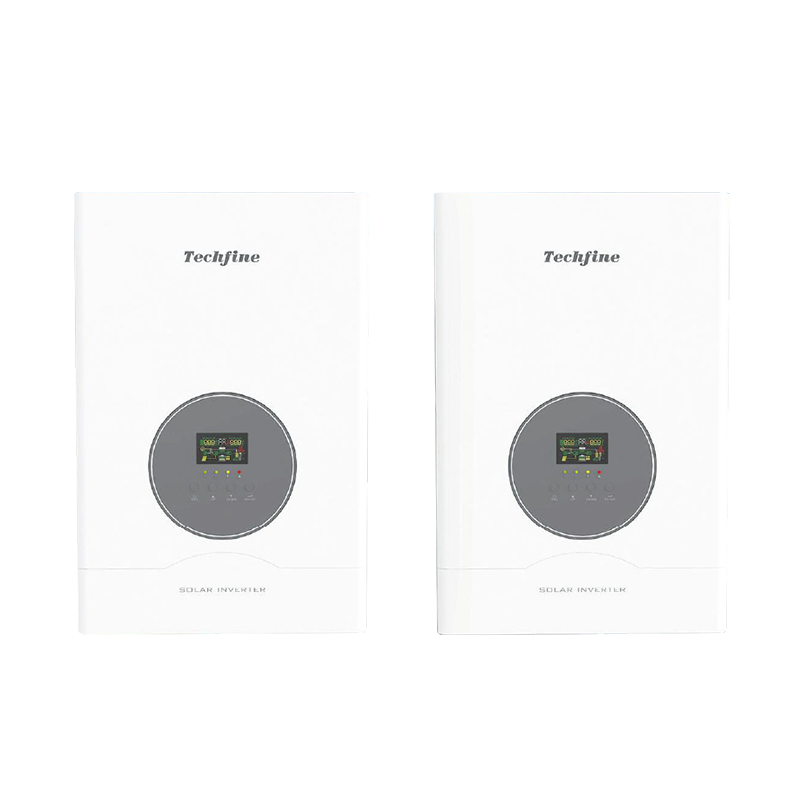
When a single unit's maximum output still falls short of a project's total demand, connecting multiple inverters to work together lets capacity scale beyond what any one High Power Solar Inverter delivers on its own. Getting paralleled units to share load evenly, rather than letting one unit carry a disproportionate share while another sits underused, depends on synchronization between the units at the control level, not just a shared electrical connection. Communication between paralleled units also has to handle a single unit dropping offline gracefully, redistributing its share of the load across the remaining units rather than causing the whole system to trip.
Thermal design, surge handling, and parallel operation all shape how a High Power Solar Inverter performs once it moves past a spec sheet and into an installation actually drawing on its full rated capacity, where the gap between a well-engineered unit and an underbuilt one becomes obvious.
Your email address will not be published. Required field are marked*


Call support 24/7 (Whatsapp)
+86 15988592807
Send us Email
[email protected]
Visit our location
Building 1, No. 21 Shengfa Road, Lucheng District, Wenzhou, Zhejiang, China



 中文简体
中文简体  Français
  عربى
عربى 