

In the global movement toward decentralized and resilient energy solutions, the off-grid inverter has become a critical enabling technology. Unlike grid-tied inverters that synchronize with a public electricity network, an off-grid inverter is specifically designed to operate independently, forming the heart of standalone power systems. These systems provide essential electricity in locations without utility infrastructure or for users seeking complete energy autonomy, highlighting the vital role of the off-grid inverter in powering homes, communities, and facilities beyond the reach of traditional grids.
The core function of an off-grid inverter is to convert direct current electricity from sources like solar panels, wind turbines, or batteries into stable, usable alternating current for standard appliances and lighting. However, its responsibilities extend far beyond simple conversion. A comprehensive off-grid inverter system typically integrates multiple critical functions. It includes a charge controller to manage the charging of battery banks from renewable sources, preventing overcharge or deep discharge. Many off-grid inverter units also incorporate a transfer switch to seamlessly start a backup generator when battery levels are low and renewable input is insufficient. This all-in-one design simplifies system architecture and improves reliability for the end-user.
The applications for an off-grid inverter are diverse and often essential. They are fundamental to rural electrification projects, bringing power to remote homes, schools, and medical clinics. Recreational vehicles, boats, and remote cabins rely on off-grid inverter systems for daily living. Agricultural and telecommunications infrastructure in isolated areas also depends on this technology. Furthermore, the off-grid inverter is a key component in preparedness systems for homes and businesses seeking a backup power source that is independent of the public grid, providing security during extended outages.
System design and sizing are paramount when deploying an off-grid inverter. The inverter's power rating must be sufficient to handle the simultaneous startup and running loads of all connected appliances. Equally important is the capacity of the accompanying battery bank, which stores energy for use when renewable generation is not available. The off-grid inverter must be compatible with the system's DC voltage (e.g., 12V, 24V, 48V) and efficiently manage the energy flow between generation, storage, and consumption. Proper sizing ensures the system is both reliable and cost-effective.
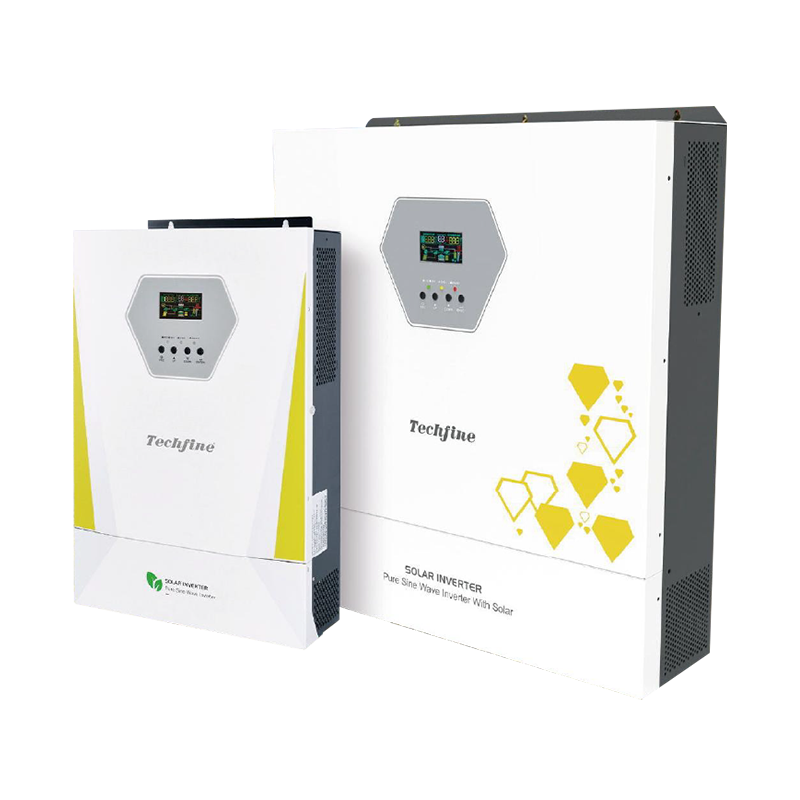
Technological advancements are continuously improving the capability and user-friendliness of the off-grid inverter. Modern units often feature sophisticated digital displays and remote monitoring capabilities, allowing users to track energy production, battery state of charge, and power consumption. Efficiency ratings have improved, meaning less energy is lost as heat during the inversion process. There is also a trend toward modular and scalable off-grid inverter designs, enabling users to expand their system capacity as needs or budgets grow.
The evolution of the off-grid inverter will likely focus on deeper integration with smart home energy management systems, enhanced grid-forming capabilities for creating local microgrids, and further improvements in efficiency and durability. As battery storage technology advances and becomes more affordable, the synergy with the off-grid inverter will create even more robust and accessible standalone power solutions. The off-grid inverter stands as a cornerstone technology for energy access and self-sufficiency, empowering users to generate, store, and manage their own electricity wherever they are.
Your email address will not be published. Required field are marked*


Call support 24/7 (Whatsapp)
+86 15988592807
Send us Email
[email protected]
Visit our location
Building 1, No. 21 Shengfa Road, Lucheng District, Wenzhou, Zhejiang, China



 中文简体
中文简体  Français
  عربى
عربى 