

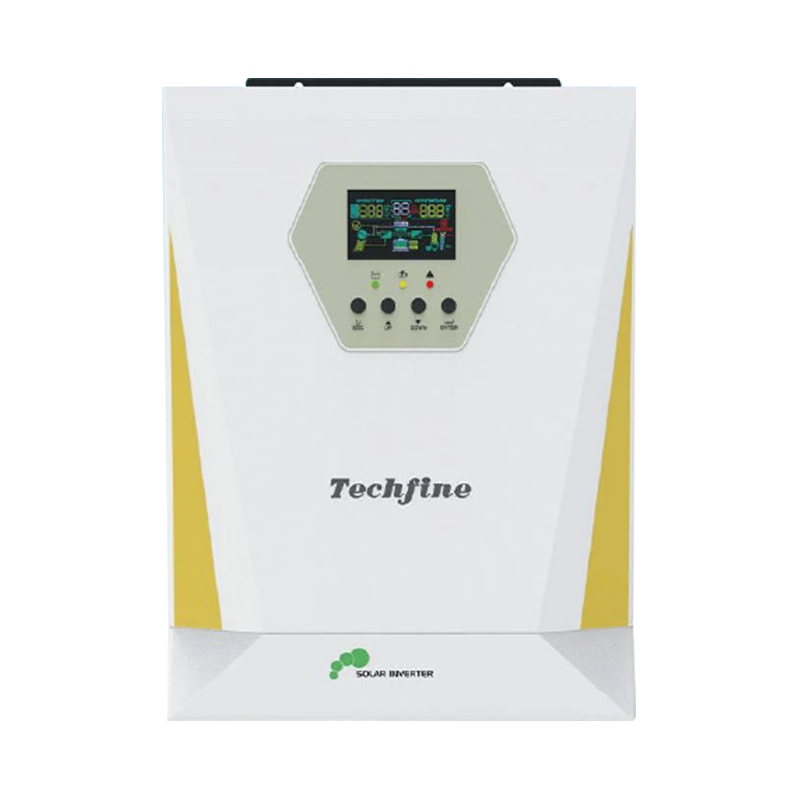
The global transition toward renewable energy has placed solar power generation at the forefront, and at the heart of every photovoltaic (PV) system lies a critical component: the PV inverter. This device, responsible for converting the direct current (DC) electricity generated by solar panels into usable alternating current (AC) for the grid or on-site consumption, is undergoing significant technological evolution to meet the demands of a rapidly growing market.
The core function of a PV inverter is fundamental to solar energy's integration into modern electrical infrastructure. Solar panels produce DC power, which is incompatible with the AC power standards of homes, businesses, and the public grid. The PV inverter performs this essential conversion with high efficiency, ensuring that small energy is lost in the process. Beyond this basic conversion, modern PV inverter units are increasingly sophisticated, incorporating advanced features for system monitoring, grid interaction, and performance optimization. Their reliability and efficiency directly impact the overall yield and financial return of a solar installation.
Technological diversification within the PV inverter segment is notable, catering to different system scales and applications. String inverters, which connect a series of panels, remain a dominant solution for residential and commercial rooftop systems due to their cost-effectiveness and proven reliability. For installations where shading or complex roof layouts are factors, power optimizers or microinverters—smaller units attached to individual or small groups of panels—are gaining popularity. These solutions mitigate performance losses from a single underperforming panel, big overall system output. For large-scale solar farms, central PV inverter stations with substantial capacity handle massive DC-to-AC conversion, supported by robust transformers and grid-connection equipment.
A key trend shaping the PV inverter industry is the integration of energy storage capabilities. As the adoption of battery storage systems grows, hybrid or multi-mode PV inverter models are becoming essential. These advanced units can manage energy flow not only from solar panels to the grid but also to and from attached battery storage. This allows for self-consumption optimization, backup power functionality during grid outages, and more sophisticated energy management, enabling homeowners and businesses to improve the utility of their solar generation.
Grid support functions are another area of rapid development for the PV inverter. Modern devices are required to do more than just feed power into the grid; they must actively support grid stability. Smart PV inverter technologies provide essential services such as voltage and frequency regulation, ramp-rate control, and low-voltage ride-through capabilities. These features are crucial as solar penetration increases, allowing PV inverter-based systems to behave as predictable and supportive assets to the electrical network rather than passive sources of generation.
The role of the PV inverter is set to become even more intelligent and integrated. The convergence of solar power, storage, and smart energy management within homes, businesses, and utility grids will rely heavily on the PV inverter as the central control unit. Its evolution from a simple converter to an intelligent energy hub underscores its pivotal position. As solar technology advances and markets expand globally, continuous innovation in PV inverter design, functionality, and grid interactivity will remain a cornerstone for the efficient and reliable growth of solar energy worldwide.
Your email address will not be published. Required field are marked*

Call support 24/7 (Whatsapp)
+86 15988592807
Send us Email
[email protected]
Visit our location
Building 1, No. 21 Shengfa Road, Lucheng District, Wenzhou, Zhejiang, China



 中文简体
中文简体  Français
  عربى
عربى 