

The pursuit of energy independence, the need for reliable power in remote locations, and the growing emphasis on resilience against grid outages are driving significant interest in self-contained power systems. Central to these standalone systems is the Off-Grid Inverter, a specialized device with a distinct purpose and architecture compared to its grid-tied counterparts. An Off-Grid Inverter is designed to operate in isolation from the utility grid, managing power flow between energy sources (like solar panels, wind turbines, or generators), a battery bank, and the electrical loads in a home, cabin, vehicle, or telecommunications site. Its functionality is critical for creating viable, sustainable power where traditional infrastructure is absent, unreliable, or intentionally avoided.
The core responsibility of an Off-Grid Inverter is twofold: converting stored DC battery power into usable AC power for appliances, and intelligently managing the entire power system. Unlike a grid-tied inverter that shuts down during a blackout, an Off-Grid Inverter is always "on," forming its own independent microgrid. It takes the DC electricity from a battery bank—charged by renewable sources or a generator—and inverts it to clean, stable AC power. The quality of this AC output, measured by its sine wave purity (pure sine wave is standard for sensitive electronics), is a key performance metric. Perhaps more importantly, the Off-Grid Inverter incorporates a charge controller function (either internally or in close coordination with an external unit) to regulate the charging of batteries from DC sources, preventing overcharging and damage, which is essential for battery longevity in cyclic daily use.
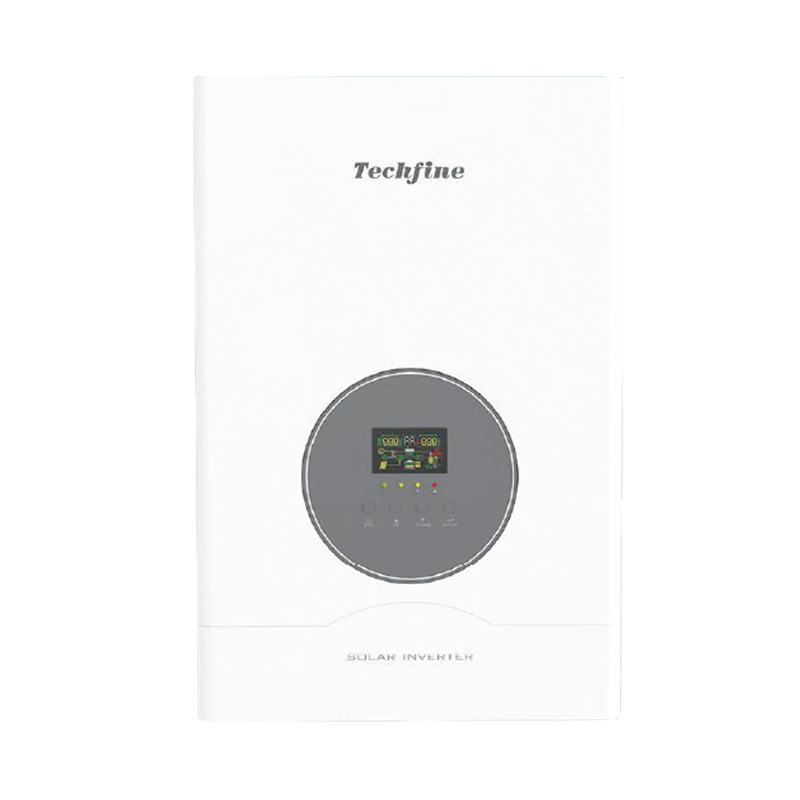
The architecture of an Off-Grid Inverter system is defined by its integration with other components. A common and efficient configuration is the Off-Grid Inverter charger, which combines the inverter, battery charger (for AC sources like a backup generator), and often a solar charge controller in one unit. This simplifies wiring and management. These systems require careful sizing; the Off-Grid Inverter must have a continuous and surge power rating sufficient to start and run all connected loads, while the battery bank must be sized to store enough energy for periods of low renewable generation. This design process balances cost, desired appliance usage, and the availability of sun or wind, making system planning a fundamental step for anyone adopting Off-Grid Inverter technology.
Innovation in the Off-Grid Inverter sector is focused on increasing efficiency, enhancing user interface, and enabling more sophisticated energy management. The integration of up to Power Point Tracking (MPPT) solar charge controllers within the inverter unit is becoming standard to improve harvest from solar arrays. Digital displays and Bluetooth/Wi-Fi connectivity are now common, allowing users to monitor system state, power flow, and battery health via smartphones. Future developments may include more advanced load-shedding capabilities, where the Off-Grid Inverter intelligently prioritizes or disconnects non-critical loads to preserve battery life during low-energy periods. As battery costs continue to decrease and the demand for energy resilience rises, the Off-Grid Inverter will become an even more pivotal technology. It stands as the essential enabling component, transforming collections of panels, batteries, and generators into a reliable, independent electrical system, empowering users to generate, store, and manage their own power on their own terms.
Your email address will not be published. Required field are marked*


Call support 24/7 (Whatsapp)
+86 15988592807
Send us Email
[email protected]
Visit our location
Building 1, No. 21 Shengfa Road, Lucheng District, Wenzhou, Zhejiang, China



 中文简体
中文简体  Français
  عربى
عربى 