
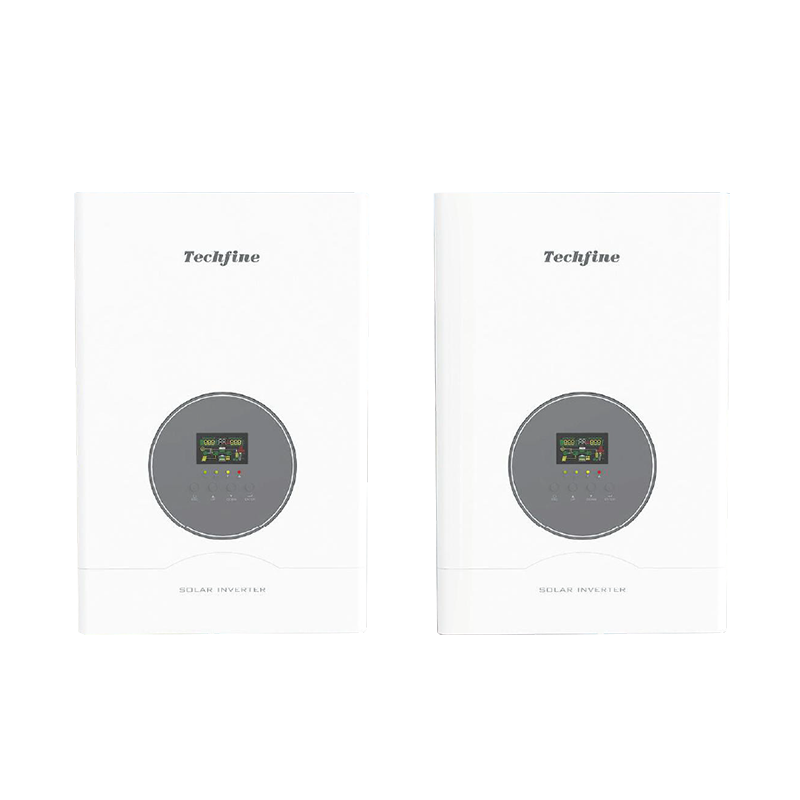
The global transition toward renewable energy has placed solar power at the forefront of electricity generation strategies for homes, businesses, and utilities. At the core of every photovoltaic (PV) installation lies a critical piece of technology: the PV Inverter. This essential device performs the fundamental task of converting the direct current (DC) electricity generated by solar panels into the alternating current (AC) electricity required by the grid and lots of appliances. However, the modern PV Inverter is far more than a simple converter; it has evolved into an intelligent energy management hub, responsible for system safety, performance optimization, and grid integration. Its efficiency, reliability, and features are pivotal in determining the overall yield, financial return, and functionality of a solar power system.
The primary and non-negotiable function of the PV Inverter is DC-to-AC conversion. Solar panels produce DC power, which varies in voltage and current depending on sunlight intensity. The PV Inverter continuously adjusts to find the ideal operating point—known as the up to Power Point (MPPT)—to harvest the lots of energy possible from the array under changing weather conditions. Beyond this, a modern PV Inverter performs critical safety functions, including automatic shutdown during grid outages (anti-islanding) to protect utility workers, and monitors system performance for faults. The conversion efficiency of a PV Inverter, often exceeding 98% for premium models, is a key metric, as every percentage point of loss directly translates to less usable solar energy.
The PV Inverter market is segmented into several topologies, each suited to different system scales and designs. For residential and small commercial systems, string inverters are the lots of common. In this configuration, a series of panels are connected into a "string," and a single PV Inverter converts the DC power for the entire string. Microinverters represent a different approach, where a small PV Inverter is installed on the back of each individual solar panel. This allows each panel to operate independently, mitigating the impact of shading or soiling on a single panel from affecting the output of the whole array, though often at a higher initial cost per watt. For larger commercial and utility-scale projects, central inverters with very high power ratings are used, often complemented by power optimizers—devices attached to each panel that perform MPPT and send optimized DC power to a central string PV Inverter.
The future of PV Inverter technology is centered on greater intelligence, resilience, and system-level value. The development of smart PV Inverter that can communicate and coordinate in real-time to form virtual power plants (VPPs) is a key frontier. Advances in wide-bandgap semiconductor materials like silicon carbide (SiC) and gallium nitride (GaN) will enable smaller, more efficient, and more reliable inverters that can operate at higher temperatures and frequencies. Cybersecurity for connected inverters will be an area of intense focus. As solar-plus-storage becomes the default for new installations and grids demand more sophisticated management, the role of the PV Inverter will only grow in complexity and importance. It will cease to be seen as a mere component and will be recognized as the central brain of a modern, dispatchable, and grid-friendly solar energy asset, crucial for unlocking the full potential of photovoltaic technology in the global energy mix.
Your email address will not be published. Required field are marked*

Call support 24/7 (Whatsapp)
+86 15988592807
Send us Email
[email protected]
Visit our location
Building 1, No. 21 Shengfa Road, Lucheng District, Wenzhou, Zhejiang, China



 中文简体
中文简体  Français
  عربى
عربى 