
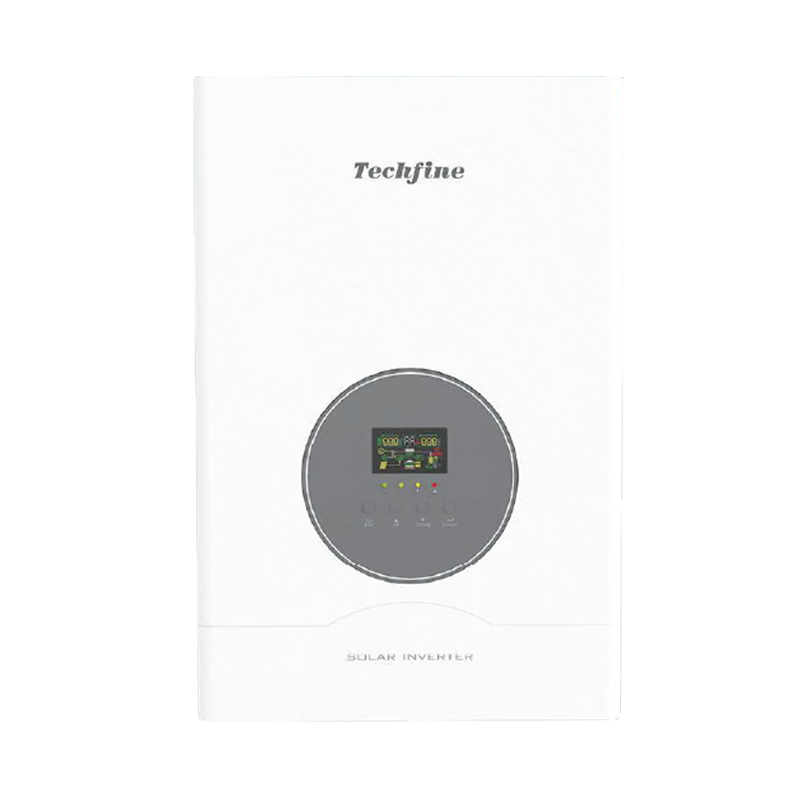
PV inverter is an essential component of any solar power system, converting the direct current electricity produced by solar panels into alternating current that can be used by home appliances and fed into the electrical grid. Without a PV inverter, the electricity generated by solar panels would remain unusable for everyday applications.
The basic function of a PV inverter is straightforward. Solar panels produce DC electricity, which flows in one direction. Homes and businesses use AC electricity, which changes direction many times per second. The PV inverter takes the DC input, passes it through electronic circuits that switch the current back and forth rapidly, and outputs AC electricity at the correct voltage and frequency for the local grid. This conversion happens many times per second, silently and automatically.
The efficiency of a PV inverter directly affects the overall performance of a solar system. An inverter that converts 97 percent of the DC power into AC power loses only 3 percent as heat. A less efficient inverter at 94 percent loses twice as much energy. Over the lifetime of a solar system, those percentage points represent a significant amount of lost electricity. High-efficiency PV inverters cost more initially but pay for themselves through higher energy production.
There are several types of PV inverters for different system configurations. String inverters are the traditional choice, connecting multiple solar panels in a series string. One inverter handles the combined output of all panels. String inverters are cost-effective and reliable but perform ideal when all panels receive similar sunlight. Microinverters are small inverters attached to each individual solar panel. Each panel operates independently, so shading or dirt on one panel does not affect the others. Microinverters cost more but offer better performance on complex roofs or in partially shaded conditions. Power optimizers are a hybrid approach, with a DC-to-DC converter at each panel and a central inverter. This configuration provides panel-level optimization at a lower cost than microinverters.
The size of a PV inverter must match the solar array. An inverter that is too small will clip the output, wasting energy on sunny days when the panels produce more power than the inverter can handle. An inverter that is too large will operate at partial load more often, where efficiency may be lower. A properly sized inverter handles the big expected output of the array while operating efficiently at typical output levels. Many installers use a DC-to-AC ratio of 1.1 to 1.3, meaning the panel capacity is slightly higher than the inverter capacity.
Monitoring capabilities have become standard on modern PV inverters. The inverter tracks energy production, system voltage, and operating temperature. This data can be viewed on a mobile app or web portal, allowing the system owner to verify that the solar array is performing as expected. If production drops unexpectedly, the monitoring system can alert the owner to a problem, such as a failed panel or a tripped breaker.
For anyone installing a solar power system, selecting the right PV inverter is as important as choosing the solar panels themselves. The inverter determines how much of the generated DC power becomes usable AC power, how well the system handles shading, and how long the system continues to operate before needing service. A quality PV inverter, properly sized and installed, keeps a solar system producing clean energy for many years.
Your email address will not be published. Required field are marked*

Call support 24/7 (Whatsapp)
+86 15988592807
Send us Email
[email protected]
Visit our location
Building 1, No. 21 Shengfa Road, Lucheng District, Wenzhou, Zhejiang, China



 中文简体
中文简体  Français
  عربى
عربى 