

The lithium battery has become the dominant energy storage choice for smartphones, laptops, power tools, and electric vehicles. Unlike older nickel-cadmium or lead-acid batteries, a lithium battery offers higher energy density and longer cycle life in a lighter package. Consumers and manufacturers have adopted the lithium battery for its ability to hold charge for months and deliver power when needed. The rechargeable nature of a lithium battery supports hundreds or thousands of cycles before capacity declines. Manufacturers continue to produce lithium battery cells in cylindrical, prismatic, and pouch formats.
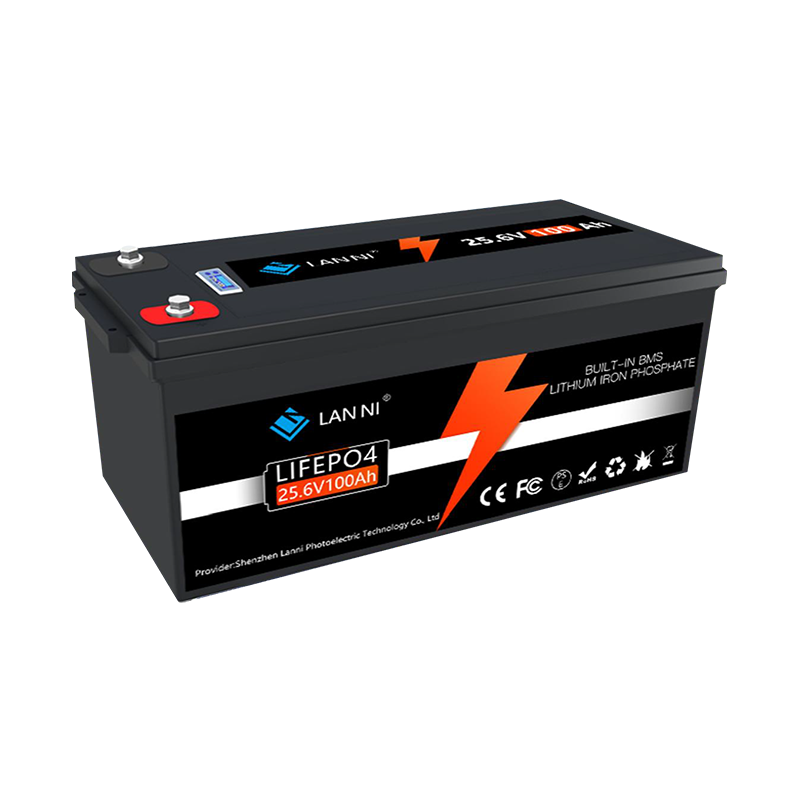
Chemistry variations of a lithium battery serve different application requirements. A lithium cobalt oxide battery offers high energy density for smartphones and laptops. A lithium iron phosphate battery provides longer cycle life and improved safety for electric buses and stationary storage. A lithium manganese oxide battery balances power output and energy density for power tools. A lithium nickel manganese cobalt oxide battery combines elements for electric vehicle applications. The chemistry choice for a lithium battery affects voltage, capacity, and thermal stability.
Energy density of a lithium battery determines how much power fits in a given size. A typical lithium battery achieves 150 to 250 watt-hours per kilogram, compared to 30 to 50 for lead-acid. The volumetric energy density of a lithium battery allows slim device designs not possible with older technologies. A lithium battery with higher energy density costs more per kilowatt-hour to manufacture. The trade-off between energy density and safety influences lithium battery chemistry selection. A lithium battery designed for big energy may have lower power output for quick discharge.
Cycle life of a lithium battery measures how many charge-discharge cycles occur before capacity drops. A quality lithium battery retains 80 percent of initial capacity after 500 to 1,000 cycles. A lithium iron phosphate battery often exceeds 2,000 cycles for long-life applications. The cycle life of a lithium battery depends on depth of discharge and operating temperature. A lithium battery kept between 20 and 80 percent charge lasts longer than one fully cycled. The end-of-life for a lithium battery occurs when capacity no longer meets user needs.
Safety features of a lithium battery prevent overheating and over-discharge. A battery management system connected to a lithium battery monitors cell voltages and temperatures. A pressure-sensitive vent on a lithium battery releases gas if internal pressure rises. A separator within a lithium battery melts at high temperature, shutting down ion flow. A lithium battery with damaged casing should not be used due to fire risk. Proper charging equipment for a lithium battery prevents overvoltage conditions that cause failure.
Charging characteristics of a lithium battery differ from other rechargeable types. A constant current followed by constant voltage profile suits lithium battery charging. The charging rate of a lithium battery is expressed as a C-rate, where 1C charges fully in one hour. A lithium battery accepts faster charging at lower states of charge. The final charging stage of a lithium battery reduces current as voltage approaches big. A lithium battery charger must stop when full to avoid overcharge damage.
The lithium battery will likely continue as the preferred rechargeable technology. Advances in solid-state designs may produce lithium battery with higher safety and energy density. For applications requiring portable power, the lithium battery offers a practical solution.
Your email address will not be published. Required field are marked*


Call support 24/7 (Whatsapp)
+86 15988592807
Send us Email
[email protected]
Visit our location
Building 1, No. 21 Shengfa Road, Lucheng District, Wenzhou, Zhejiang, China



 中文简体
中文简体  Français
  عربى
عربى 