

A Hybrid PV Solar System keeps a home running through a grid outage only when it knows which circuits to keep alive. A battery cannot feed every outlet in a house at once, and a plan that tries to do so drains the battery in hours. The systems that perform best in a blackout split the home into essential and non-essential loads before the first panel is installed, and they size the backup around the essential group.
Essential loads are the circuits that a household with a Hybrid PV Solar System cannot do without for a day or two: the refrigerator and freezer, lighting, the internet router, phone and laptop charging, and the controls of a boiler or water pump. Together they may average well under 1 kW and use roughly 4 to 6 kWh per day, depending on household habits and equipment.
Cooking appliances, clothes dryers, electric vehicle chargers and air conditioning demand far more power, and running several of them during an outage can empty the battery quickly. Reviewing the home circuit by circuit separates everyday necessities from equipment that can stay switched off.
This distinction shapes the whole configuration. A Hybrid PV Solar System planned around a short list of essential circuits uses its stored energy far more efficiently than one expected to supply every appliance.
Once the priority circuits are identified, the electrical layout needs to reflect that decision. An essential-loads subpanel gives the backup circuits their own connection point, fed from the inverter’s backup output, while non-essential circuits stay on the main distribution panel. During a grid outage the inverter supplies only the designated circuits, not the entire house. In a Hybrid PV Solar System, this separation also helps installers match the backup output to the household’s actual power requirements.
The inverter’s backup output rating is part of this calculation. A Hybrid Inverter System rated for a few kilowatts may support refrigeration, lighting and electronics, but a water pump or heating appliance can introduce a much higher starting load. The electrician needs to consider both continuous consumption and starting current when deciding which circuits share the backup supply.
Many hybrid systems let users set a minimum state of charge as a backup reserve, which stops ordinary daily cycling from using all the stored energy before an outage. For a Hybrid PV Solar System, this setting determines how much battery capacity remains available when the grid fails.
A 10 kWh battery with a 30 percent reserve keeps approximately 3 kWh for backup, leaving 7 kWh for normal daily operation. A higher reserve gives more energy during a grid failure but less for regular self-consumption. Severe weather forecasts and local outage patterns can justify a larger reserve, while a lower setting may suit a stable supply. A Hybrid Home Power System with adjustable reserve settings gives homeowners room to manage this balance.
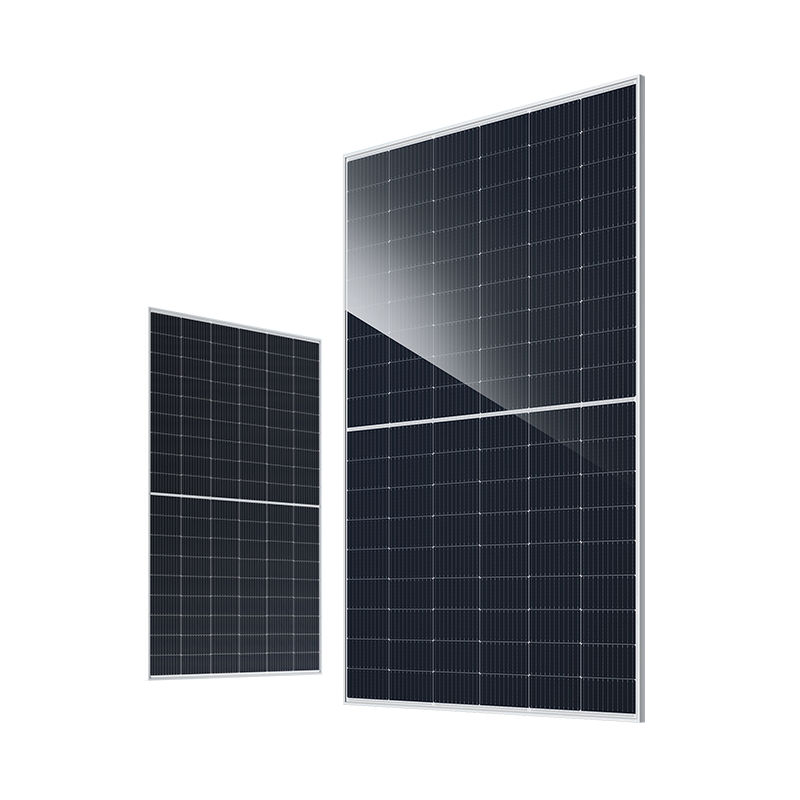
A conventional grid-connected solar inverter normally shuts down when the utility supply fails, even in full sunlight. This anti-islanding protection prevents electricity from being fed into power lines while utility workers may be carrying out repairs.
A properly configured Hybrid PV Solar System with backup capability works differently. Its inverter creates a local supply for the designated circuits while the panels keep generating, and surplus solar output recharges the battery, extending how long essential equipment stays powered.
Cloudy weather changes the balance, since panels may not cover household demand and refill storage at the same time. Some configurations accept generator input as another charging source during long periods of poor sun. Backup duration therefore depends on solar generation, battery capacity and consumption.
The location of the essential-loads subpanel and the route of its wiring should be settled during initial electrical planning, because moving circuits during installation is far easier than reorganizing a distribution system after the home is occupied. Circuit labels and backup testing show which appliances stay operational when the utility supply is disconnected.
Wenzhou Sairifo New Energy Technology Co., Ltd. supplies P-type single-glass solar modules, GD Series inverters from 1200W to 11000W, UD Series inverters from 800W to 10000W, and wall-mounted lithium energy storage batteries, along with hybrid on-grid and off-grid solutions for residential power applications. These ranges suit installations with different load requirements, but the inverter, battery and solar array need compatible ratings. For a Hybrid PV Solar System, these component choices must be coordinated with the planned backup circuits rather than selected independently.
Your email address will not be published. Required field are marked*


Call support 24/7 (Whatsapp)
+86 15988592807
Send us Email
[email protected]
Visit our location
Building 1, No. 21 Shengfa Road, Lucheng District, Wenzhou, Zhejiang, China


 中文简体
 Français
 عربى
