

A Solar Energy System For Home Off Grid has to work on the worst day of the year, because there is no utility line to borrow from when the sun is weak. Summer output gets the attention, yet panels and batteries are sized in December, when days are short, the sun is low and household demand peaks.
Sunlight is measured in peak sun hours, the number of hours per day with full-strength light. A site that gets 5.5 peak sun hours in June may get only 2.5 in December. Household demand moves the other way: lights run longer, heat pumps and fans work harder, and people spend more time indoors with appliances on.
Surplus from long summer days cannot carry a home through months of weak winter production. For that reason, winter conditions give a Solar Energy System For Home Off Grid a more useful reference point than annual average sunlight.
A basic estimate divides daily energy use by peak sun hours, then applies an efficiency factor of about 0.75 to cover inverter, cable and temperature losses. For a household using 8 kWh per day:
| Season | Peak sun hours | Array size needed |
|---|---|---|
| June | 5.5 | About 1.9 kW |
| December | 2.5 | About 4.3 kW |
A Solar Energy System For Home Off Grid sized only for summer leaves the home well short in winter. Module capacity should follow local winter irradiation, available installation space and daily consumption, not summer generation alone. An off-grid solar system for a home sized this way produces enough when the days are shortest.
Even a correctly sized array falls short when cloudy days run back to back. Autonomy describes how many days a battery can carry the home without meaningful solar input. A household using 8 kWh daily needs 16 kWh of usable energy for two days. If lithium iron phosphate batteries are run at 90 percent usable depth of discharge, the nominal capacity comes to about 18 kWh.
Lithium iron phosphate batteries generally need protection against charging below freezing. A wall-mounted lithium battery in a suitable indoor location stays within its permitted temperature range, and low-temperature charging controls add a second layer of protection. The battery bank of a Solar Energy System For Home Off Grid is sized for demand and placed for winter conditions.
The winter sun follows a lower path across the sky. A steeper panel angle faces it more directly, and some winter-focused installations use an angle 10 to 15 degrees above local latitude. The right setting still varies with local conditions and roof structure.
Trees, nearby buildings and roof structures cast longer shadows when the sun stays low, especially around midday. Even partial shading can cut the output of an affected string. Ground-mounted systems and adjustable frames allow free choice of angle, while rooftop systems must work within the existing pitch and orientation. In a Solar Energy System For Home Off Grid, avoiding winter shading can matter as much as adding panel capacity.
Long spells of poor weather can still exceed the assumptions used in sizing a Solar Energy System For Home Off Grid. A backup source keeps essential loads running without an oversized array and battery bank built for rare events. A hybrid off-grid system combines solar generation, battery storage and a generator or grid connection, and the inverter manages the sources so the household can switch to backup when stored energy runs low. This arrangement suits a home off-grid solar setup in regions where long stretches of cloud occur.
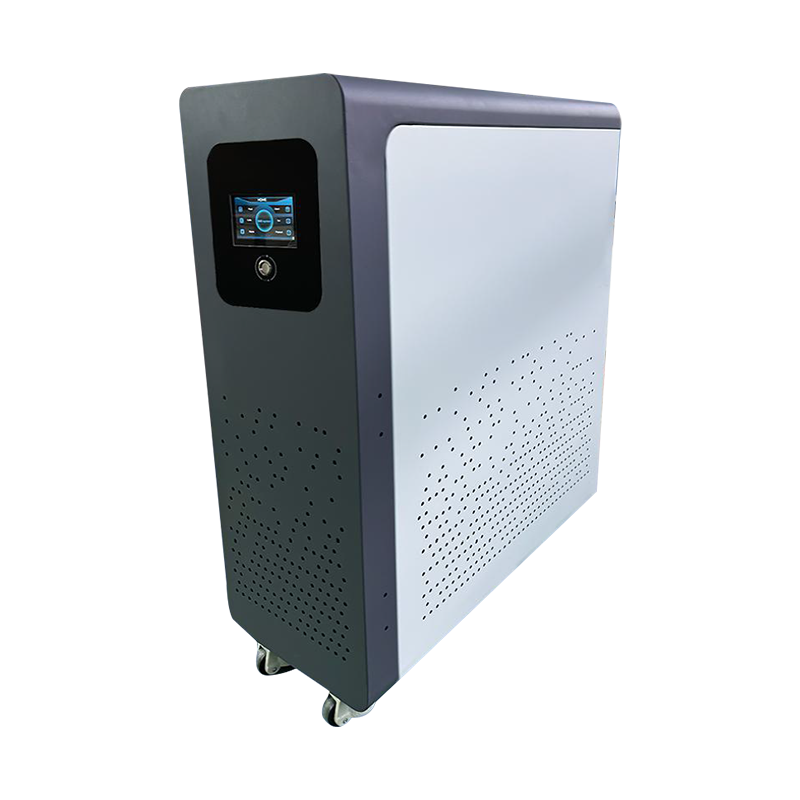
The components in an off-grid installation work as one chain. Panels set how much electricity can be generated in limited daylight, batteries cover the hours and days when production falls short, and the inverter must handle the household's operating loads. Panel angle, shading and battery temperature add finer points to each link.
Treating panel wattage or battery capacity as isolated figures hides how the chain behaves in January. A Solar Energy System For Home Off Grid planned around winter demand gives its owner a realistic basis for year-round operation, and the summer surplus becomes a bonus rather than a requirement.
Your email address will not be published. Required field are marked*

Call support 24/7 (Whatsapp)
+86 15988592807
Send us Email
[email protected]
Visit our location
Building 1, No. 21 Shengfa Road, Lucheng District, Wenzhou, Zhejiang, China



 中文简体
 Français
 عربى
