

Energy storage projects rarely operate around one universal battery specification. A small backup system, a residential solar installation, and a commercial energy storage project can require very different voltage and capacity combinations. For B2B buyers, an Averge Lithium Battery therefore needs to be evaluated as part of a complete storage configuration rather than as an independent battery unit.
Wenzhou Sairifo New Energy Technology Co., Ltd. supplies energy storage lithium batteries in several structural and electrical configurations. Its product range includes wall-mounted, mobile, rack-mounted, and stacked batteries, together with different voltage and capacity combinations. This range gives overseas buyers flexibility when developing battery products for different energy-storage markets.
Voltage is one of the earliest specifications to confirm when sourcing an Averge Lithium Battery. The battery voltage needs to correspond with the inverter, charge and discharge equipment, and overall system architecture.
Sairifo's energy storage range includes 12.8V, 25.6V, and 51.2V lithium iron phosphate battery configurations. Its wall-mounted series, for example, offers 25.6V and 51.2V options with capacities ranging from 100Ah to 200Ah.
For distributors, this creates a practical product segmentation. Lower-voltage batteries can serve certain compact power systems, while higher-voltage configurations can be incorporated into systems designed around larger energy requirements. The appropriate specification depends on the electrical architecture rather than battery capacity alone.
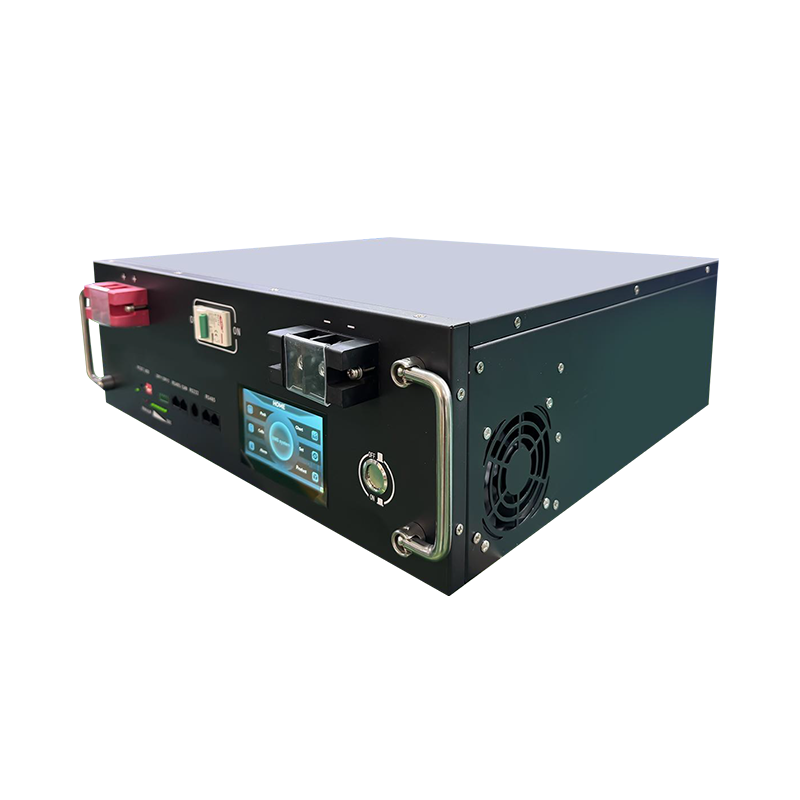
An Averge Lithium Battery can be supplied in different physical structures depending on the installation requirements. Wall-mounted batteries can reduce the need for floor-mounted cabinets, while rack-mounted and stacked configurations provide different approaches to organizing multiple battery units.
|
Configuration |
Typical Procurement Focus |
Relevant Specification |
|
Wall-mounted |
Residential and compact installations |
Voltage, capacity, dimensions |
|
Rack-mounted |
Organized battery-room layouts |
Module arrangement and communication |
|
Stacked |
Expandable storage configurations |
Capacity combination and installation space |
|
Mobile |
Temporary or movable power requirements |
Weight, enclosure and battery capacity |
|
Container system |
Commercial and industrial projects |
Large-scale capacity and system integration |
The physical configuration also affects transportation, installation, packaging, and system expansion. Buyers planning private-label or distribution programs should therefore evaluate the battery enclosure together with electrical specifications.
Sairifo uses lithium iron phosphate, or LiFePO4, cells across its energy storage lithium battery range. The company lists cycle-life specifications of 6,000 cycles or more for its general energy-storage product matrix, while some larger grid-level configurations specify more than 8,000 cycles. Actual service life remains dependent on operating conditions, charging strategy, temperature, and system management.
For an Averge Lithium Battery, cell chemistry is only one part of the finished product. Battery management, balancing, thermal conditions, electrical protection, and enclosure design all influence how the battery operates within the complete energy storage system.
This is particularly relevant to B2B buyers because a battery pack may eventually be integrated with solar panels, inverters, energy management equipment, or backup power systems. Compatibility should be confirmed before bulk production.
Modern battery packs often need to communicate with the inverter or energy management equipment rather than operating as isolated power sources. Sairifo's wall-mounted battery models support CAN, RS232, and RS485 communication interfaces and can be configured with display options including LCD or touch screens. Active balancing is also available on the listed models.
For an Averge Lithium Battery, communication capability becomes particularly relevant when buyers develop systems containing multiple battery units. The communication protocol, inverter compatibility, and battery management configuration should be confirmed during technical discussions.
Sairifo states that its wall-mounted batteries can support up to 32 parallel connections and compatibility with most inverter brands on the market. For a specific project, buyers should still verify the exact inverter and communication requirements before placing an order.
Battery assembly requires control at several stages because the final product combines cells, electrical connections, battery-management components, enclosure parts, and communication systems.
Sairifo states that it performs an initial inspection after each mass-production process and carries out random inspections during production. For finished products, the company conducts full inspection according to customer requirements and international standards.
For overseas orders, this factory-side inspection provides a defined quality-control stage before shipment. Buyers can confirm requirements such as voltage, capacity, enclosure structure, communication interface, display configuration, packaging, and other technical specifications before production.
The Averge Lithium Battery is therefore better considered as a configurable energy-storage component. Voltage, capacity, cell chemistry, physical structure, communication interface, and system compatibility all need to correspond with the intended application. Sairifo's range of lithium iron phosphate battery configurations gives distributors and project suppliers several formats for developing different energy-storage product programs.
Your email address will not be published. Required field are marked*


Call support 24/7 (Whatsapp)
+86 15988592807
Send us Email
[email protected]
Visit our location
Building 1, No. 21 Shengfa Road, Lucheng District, Wenzhou, Zhejiang, China



 中文简体
中文简体  Français
  عربى
عربى 