
The popularity of small solar systems has changed a lot in recent years.
What used to belong mainly to professional installers is now widely discussed in garages, workshops, farms, RV communities, and home improvement forums. Online tutorials make a DIY solar PV setup look surprisingly approachable, especially for small off-grid projects or backup power systems.
But inside the electrical industry, safety concerns around self-installed photovoltaic systems remain a serious topic.
The risk usually does not come from sunlight or the panels themselves.
It comes from wiring quality, system matching, and how people underestimate DC electrical behavior.
One reason DIY solar PV projects can become risky is that solar systems operate differently from normal household AC power.
Many beginners are familiar with standard home electrical circuits where breakers disconnect current relatively quickly during faults. Solar DC systems behave differently because photovoltaic panels continue generating voltage whenever light reaches the surface.
Even after disconnecting part of the system, live voltage may still remain present across cables or connectors.
This becomes especially dangerous during:
Actually, DC arcs are harder to extinguish than ordinary AC sparks, which is one reason professional solar installations follow stricter connection standards.
Most modern solar panels themselves are relatively reliable.
In many DIY solar PV failures, the problem begins around connectors, cable joints, or poorly crimped terminals rather than the photovoltaic modules directly.
A slightly loose DC connection creates electrical resistance. Once resistance increases, localized heating develops gradually under continuous sunlight exposure. Over time, connector housings may discolor, deform, or even melt.
This is especially common in systems where connectors from different manufacturers are mixed together improperly.
From the outside, the installation may still look normal while the internal contact pressure becomes unstable.
Actually, many small solar fires reported in residential systems begin from overheated connectors rather than damaged panels.
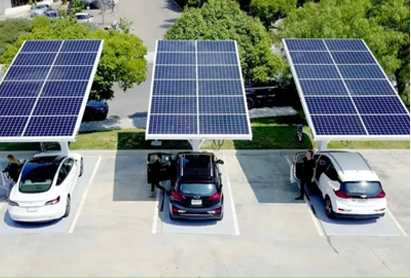
Ground-mounted DIY solar PV systems are usually easier to inspect and maintain.
Roof installations create additional safety challenges because the wiring experiences stronger temperature fluctuation and continuous outdoor exposure. Sunlight heats roof surfaces heavily during summer, which accelerates aging around cable insulation and plastic connector parts.
Movement also becomes more difficult once the system is mounted high above the ground.
This affects:
Actually, many installation mistakes remain unnoticed simply because homeowners rarely inspect rooftop systems closely after the initial setup.
Small DIY solar PV systems increasingly use lithium battery storage for backup power or off-grid operation.
The problem is that battery integration introduces another layer of electrical risk entirely. Voltage mismatch, unstable charging control, or improper battery protection settings may gradually damage both storage systems and connected electronics.
Improper battery configuration sometimes causes:
Professional installers usually pay close attention to charge controller compatibility because batteries respond very differently under continuous charging conditions.
Many beginners focus heavily on solar panel wattage while overlooking the electrical behavior of the storage system itself.
Outdoor exposure creates long-term challenges for any DIY solar PV installation.
Rainwater rarely damages systems immediately. Instead, moisture enters small gaps gradually around connectors, junction boxes, or cable entries over long periods. Corrosion develops slowly until resistance increases enough to affect system stability.
This becomes more noticeable in:
Actually, some systems continue operating normally for months before moisture-related electrical problems finally appear.
That delayed failure often makes troubleshooting much harder.
A lot of people building a DIY solar PV system focus mainly on reducing upfront cost.
Inside the solar industry, however, lower-grade components often create reliability problems much earlier than expected. Cheap connectors, undersized cables, unstable breakers, and poorly sealed junction boxes may all pass initial testing while still degrading quickly outdoors.
The difficult part is that electrical problems usually develop gradually.
A system may appear perfectly functional during the first months of operation while internal heat or moisture damage slowly accumulates.
This is one reason professional installers usually prioritize component compatibility and certification rather than simply choosing the lowest-priced hardware.
A compact DIY solar PV setup for an RV, workshop, or small cabin may seem harmless compared with large commercial installations.
In reality, even low-voltage systems still require proper cable sizing, fuse protection, ventilation, and weather-resistant connections. Solar electricity behaves consistently regardless of whether the system is large or small.
Most long-term safety problems begin from details that initially seem minor:
The panels themselves are usually not the dangerous part.
The risk comes from how the entire electrical system is assembled and maintained afterward.
That is why experienced installers often say solar power is very reliable when designed carefully — and surprisingly unforgiving when shortcuts are taken during installation.
Your email address will not be published. Required field are marked*

Call support 24/7 (Whatsapp)
+86 15988592807
Send us Email
[email protected]
Visit our location
Building 1, No. 21 Shengfa Road, Lucheng District, Wenzhou, Zhejiang, China



 中文简体
中文简体  Français
  عربى
عربى 